Navigating Pet Loss: A Gentle Guide to Healing
By Sarah Chen, Co-Founder of PawUrnCo

Losing a pet is one of the most profound losses we experience in life. For many of us, our pets are not just animals — they are family members, confidants, and constant companions who greet us at the door every day and sleep at the foot of our beds every night. When they leave us, the grief can be overwhelming.
If you're reading this because you've recently lost a beloved pet, first: we are so sorry. There are no words that can take away the pain, but we hope this guide offers some comfort and practical guidance as you navigate your grief journey.
Understanding Pet Grief
Pet grief is real, valid, and deeply personal. The human-animal bond is powerful — studies have shown that losing a pet can trigger grief as intense as losing a human family member. Yet pet loss is often misunderstood by those who haven't experienced it, which can leave us feeling isolated in our sorrow.
"Grief is the price we pay for love." — Queen Elizabeth II
Your grief may manifest in many ways: sadness, anger, guilt, emptiness, even physical symptoms like fatigue or loss of appetite. All of these are normal. There is no "right" way to grieve and no timeline for healing.
The Stages of Pet Grief
While everyone's journey is unique, many people experience similar emotional stages after losing a pet:
- Shock and Denial: In the first days, it may feel impossible to accept that your pet is gone. You might still expect to hear their collar jingle or see them waiting by the door.
- Guilt: It's common to replay your pet's final days and wonder if you could have done more. Remember: you did the best you could with the knowledge and resources you had.
- Anger: You may feel angry at your vet, at circumstances, at your pet for leaving, or even at yourself. This anger is a natural part of grief.
- Depression and Loneliness: As the initial shock fades, the reality of life without your pet sets in. This can be the hardest stage, but it's also where healing begins.
- Acceptance: Over time, you begin to accept your pet's passing. The pain doesn't disappear, but it softens, and you can focus on the joy your pet brought rather than the loss.
Healthy Ways to Cope
1. Allow Yourself to Grieve
Don't rush your healing or suppress your emotions. Cry when you need to. Talk about your pet. Visit their favorite spots. Grief is not a sign of weakness — it's a testament to the depth of love you shared.
2. Create a Memorial
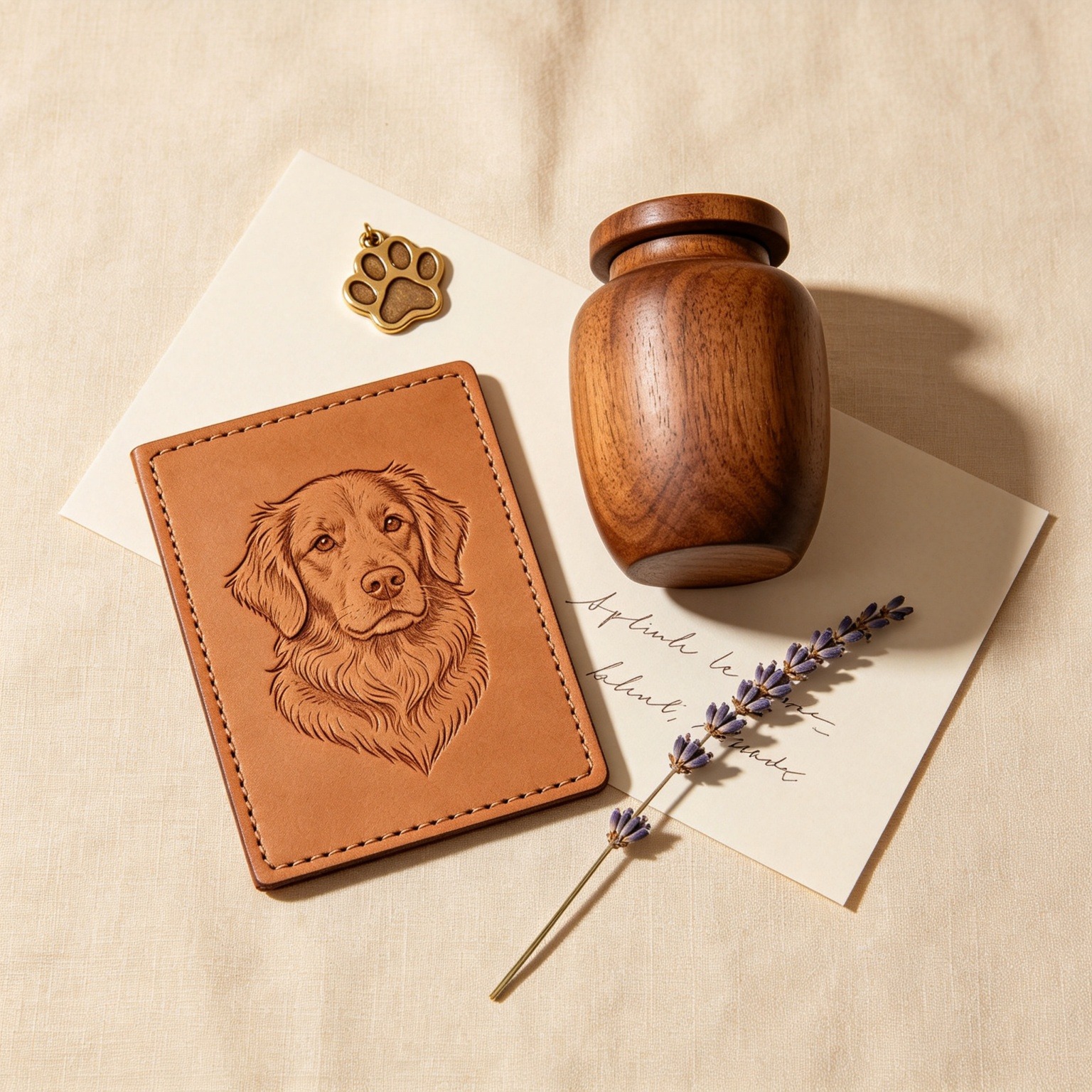
Creating a physical tribute to your pet can be a powerful part of the healing process. Whether it's a custom leather portrait, a handcrafted urn, a memory box, or a garden planted in their honor, having something tangible to hold onto can bring comfort. At PawUrnCo, every memorial we create is designed with this purpose in mind.
3. Share Your Story
Talk to friends and family who understand. Join a pet loss support group — online or in person. Write about your pet in a journal. Sharing your memories and feelings helps process grief and keeps your pet's spirit alive.
4. Be Gentle with Yourself
Healing takes time. There will be good days and hard days — anniversaries, holidays, and random moments can trigger fresh waves of grief. Be patient and kind with yourself. There is no deadline for feeling better.
5. Consider a Ritual
Many people find comfort in holding a small ceremony or ritual to say goodbye. This could be a scattering of ashes, a candle-lighting, a gathering of loved ones to share stories, or a quiet moment of reflection at a place that was special to your pet.
When to Seek Additional Support
While grief is a natural process, there are times when professional support can be helpful. Consider reaching out to a therapist or counselor who specializes in pet loss if:
- Your grief feels overwhelming and doesn't ease over time
- You're unable to perform daily activities (work, self-care, caring for other pets)
- You're experiencing persistent depression, anxiety, or thoughts of self-harm
- You feel stuck in your grief and unable to move forward
There is no shame in seeking help. The Association for Pet Loss and Bereavement (APLB) offers free online support groups, and many therapists specialize in this area.
Honoring Their Legacy
In time, you may find that honoring your pet's memory brings a sense of purpose and peace. This could mean volunteering at an animal shelter, donating to a rescue in their name, fostering another animal, or simply sharing their story to help others going through loss.
Your pet's love changed you. That love doesn't disappear when they do — it lives on in you, in your memories, and in the way you care for others. Holding onto that love, while also allowing yourself to heal, is the most beautiful tribute you can give.
If you've recently lost a pet, please know you're not alone. Our team at PawUrnCo has all been there, and we're here to support you in whatever way we can. Reach out to us anytime at [email protected].